

OCC Debanking Report: 9 Big US Banks Restricted 'Digital Asset Activities', What 420,000 Pages Show
The OCC's final debanking review of the nine largest national banks lists digital asset activities among restricted sectors from 2020 to September 2025. We read what the report says about crypto, and what it does not.

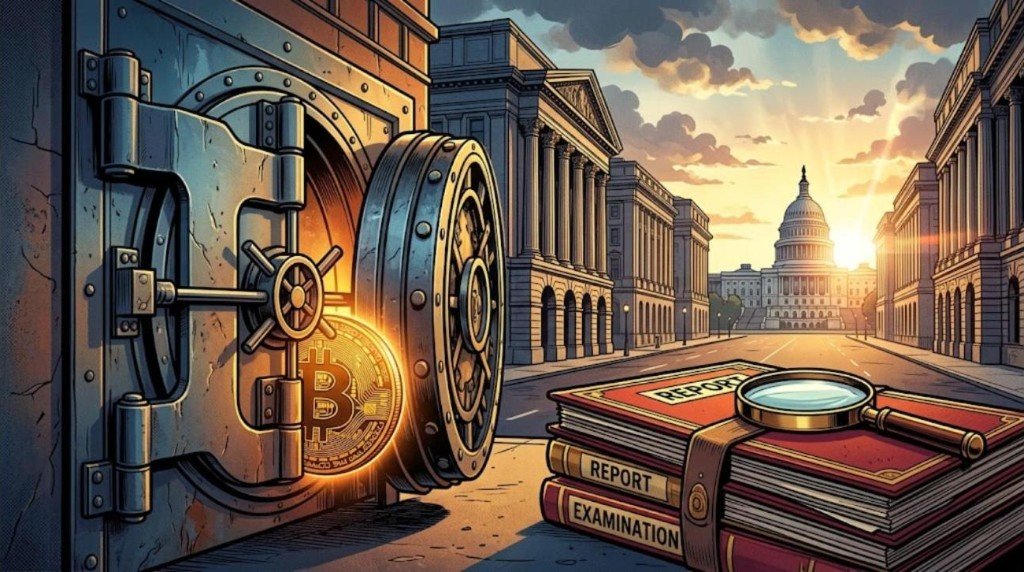
Published October 17, 2026. Sources: Office of the Comptroller of the Currency (OCC), White House. Information only, not investment advice.
The US bank regulator says all nine of the country's largest national banks had policies that could cut off lawful businesses, and "digital asset activities" were on the list. The OCC's final debanking report, released on October 14, 2026, covers nearly six years of bank decisions. We read the report to separate what it actually says about crypto from what it does not.
Key takeaways
- Nine banks reviewed: JPMorgan Chase Bank, Bank of America, Citibank, Wells Fargo Bank, U.S. Bank, Capital One, PNC Bank, TD Bank and BMO Bank, for the period 2020 through September 2025.
- Scale of the review: nearly 100,000 complaints and about 50,000 documents, roughly 420,000 pages, according to the OCC.
- Crypto is named as a restricted sector: the OCC lists "digital asset activities" next to oil and gas, coal, firearms, detention facilities and tobacco.
- No bank is singled out on crypto: the report describes crypto restrictions across "many institutions" and does not attribute a specific crypto policy to a named bank.
- No penalties yet: the OCC says it will assess further changes to its rules and supervision, but gives no timeline.
What the OCC found
According to the OCC's News Release 2026-90, all nine banks had policies that could deny or limit access to services based on customers' political or religious beliefs or their lawful business activities. On crypto specifically, the report states that "many institutions also placed restrictions on banking digital asset activities, including on issuers, exchanges, or administrators, often attributed to financial crime considerations."
Comptroller Jonathan V. Gould said the review provides "irrefutable evidence that the nation's largest banks have denied, debanked and discriminated" and added: "Fair access to financial services is not a mantra—it is a mandate." On the steps banks have taken since, he said: "I am not confident that they will be enough." The report also notes that "no bank has fully and publicly acknowledged its past debanking decisions."
What the report says, and does not say, about crypto
| Question | What the OCC report says |
|---|---|
| Were crypto firms restricted? | Yes: "digital asset activities" is one of six restricted sectors listed |
| Which crypto businesses? | Issuers, exchanges and administrators |
| Stated reason | "often attributed to financial crime considerations" |
| Which bank restricted crypto? | Not specified: no bank is named for its crypto policy |
| Fines or enforcement? | None announced |
| Referrals to the Justice Department? | Not mentioned |
| Timeline for new rules? | None given |
Source: OCC News Release 2026-90 and report "Guaranteeing Fair Banking for All Americans" (October 14, 2026), BullishStation reading.
The numbers behind the review
- The review covers 69 months (January 2020 to September 2025). Nearly 100,000 complaints over that period is about 1,450 complaints a month (BullishStation calculation; the OCC does not say how many concern crypto).
- About 420,000 pages across 50,000 documents is roughly 8.4 pages per document.
- The six restricted sectors named by the OCC: oil and gas exploration, coal, firearms and ammunition, detention facilities, tobacco and e-cigarettes, and digital asset activities.
How we got here
| Date | Step |
|---|---|
| Aug 7, 2025 | Executive Order 14331, "Guaranteeing Fair Banking for All Americans", orders regulators to address politicized or unlawful debanking |
| Sep 2025 | OCC starts its review of the nine largest national banks |
| Dec 10, 2025 | Preliminary findings (NR 2025-123), covering 2020–2023: digital assets cited among sectors where at least one bank restricted access |
| Oct 14, 2026 | Final report (NR 2026-90), extended to September 2025 |
The debanking issue matters for crypto because bank accounts are the on-ramp for exchanges, stablecoin issuers and miners. Stablecoin issuers need banks to hold reserves (see what is a stablecoin), and some crypto firms have sought their own federal charters instead, as with Circle's national trust bank approval.
Why it matters
- Official record: for the first time, the main national bank supervisor puts in writing that large banks restricted digital asset businesses as a category, after years of industry complaints.
- Pressure on banks to serve crypto firms: combined with new custody rules for advisers and funds (our analysis of the SEC custody proposal), the report adds to a US policy shift toward integrating crypto into mainstream finance.
- Contrast with Europe: in the EU, the debate is about which stablecoins platforms may offer, not bank access: see ESMA's non-MiCA stablecoin deadline and EBA's USDC supervision.
- Corporate treasuries: listed companies holding Bitcoin, such as Strategy, depend on banking and capital-markets access (Strategy's latest filings).
What to watch next
- OCC follow-up: the OCC says it is "considering actions" to bar discrimination based on political or religious beliefs, working on reputation risk and assessing "further changes to the regulatory and supervisory framework". It mentions possible guidance on the risk-based application of anti-money-laundering (BSA) rules. No dates were given.
- Bank responses: any public acknowledgment by the nine banks, which the OCC says none has made fully so far.
- Complaints channel: customers can still file through the OCC's helpwithmybank.gov site.
- Related US deadlines: October 20, 2026 (end of SEC comments on Regulation Crypto Assets, details) and October 27–28 (FOMC, Fed tracker).
FAQ
What is debanking?
When a bank closes or refuses an account, or limits services, for a customer or an entire sector, rather than on an individual risk assessment.
Which banks are in the OCC report?
JPMorgan Chase Bank, Bank of America, Citibank, Wells Fargo Bank, U.S. Bank, Capital One, PNC Bank, TD Bank and BMO Bank.
Does the report say JPMorgan or another bank debanked crypto firms?
No. The report says many institutions restricted digital asset activities but does not attach that finding to a named bank.
Will the banks be fined?
The OCC has not announced penalties. It says it will assess further changes to its rules and supervision.
What period does the review cover?
From 2020 through September 2025.
Latest: Bank of America hit with $1.21 billion in US penalties over money laundering and sanctions failures (October 13 orders from FinCEN, the OCC and OFAC).
Related reading
- Circle wins OCC approval for a national trust bank
- What is a stablecoin?
- SEC crypto custody proposal
- Crypto liquidity and institutional flows guide
- CLARITY Act: what comes next
Sources
- OCC, News Release 2026-90, October 14, 2026: occ.gov
- OCC, report "Guaranteeing Fair Banking for All Americans" (PDF): occ.gov
- OCC, News Release 2025-123 (preliminary findings), December 10, 2025: occ.gov
- White House, Executive Order "Guaranteeing Fair Banking for All Americans", August 7, 2025: whitehouse.gov
Disclaimer: This article is for information only and is not investment, legal or financial advice. BullishStation does not recommend buying or selling any asset.
What's Your Reaction?
 Like
0
 Dislike
0
 Love
0
 Funny
0
 Wow
0
 Sad
0
 Angry
0













Comments (0)